Python - 继承
Python 中的继承是什么?
Inheritance(继承)是像 Python 这样的面向对象编程语言中最重要的特性之一。它用于将一个 class 的属性和行为继承到另一个 class。继承另一个 class 的 class 称为 child class(子类),被继承的 class 称为 base class 或 parent class(基类或父类)。
如果您需要设计一个新 class,而其大部分属性已经在现有 class 中定义良好,那么为什么要重新定义它们呢?Inheritance 允许重用现有 class 的功能,并在需要时扩展以设计新 class。
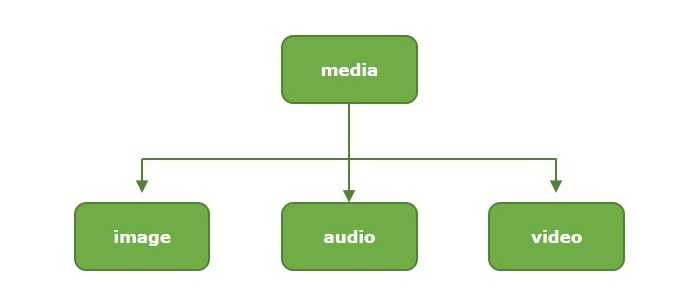
当一个新 class 与现有 class 具有“IS A”(是一种)关系时,就会涉及 Inheritance。例如,Car IS a vehicle(汽车是一种车辆),Bus IS a vehicle(公交车是一种车辆),Bike IS also a vehicle(摩托车也是一种车辆)。在这里,Vehicle 是 parent class,而 car、bus 和 bike 是 child classes。
创建 Parent Class
其属性和方法被继承的 class 称为 parent class。它与其他 class 一样使用 class 关键字定义。
语法
创建 parent class 的语法如下所示 −
class ParentClassName:
   {class body}
创建 Child Class
从 base class 继承的 class 的声明方式与其 parent class 类似,但是需要在括号中提供 parent class 的名称。
语法
以下是 child class 的语法 −
class SubClassName (ParentClass1[, ParentClass2, ...]):
   {sub class body}
Inheritance 的类型
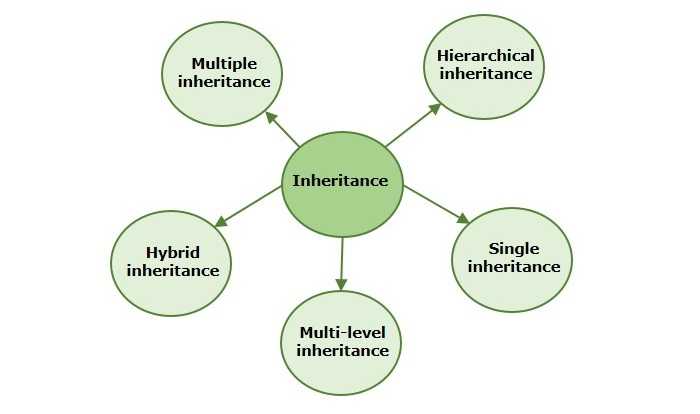
在 Python 中,inheritance 可以分为五种不同类别 −
- Single Inheritance(单继承)
- Multiple Inheritance(多继承)
- Multilevel Inheritance(多级继承)
- Hierarchical Inheritance(层次继承)
- Hybrid Inheritance(混合继承)
Python - Single Inheritance
这是最简单的 inheritance 形式,其中 child class 只从一个 parent class 继承属性和方法。
示例
下面的示例展示了 Python 中的 single inheritance 概念 −
# parent class(父类)
class Parent:
   def parentMethod(self):
      print ("调用父类方法")

# child class(子类)
class Child(Parent):
   def childMethod(self):
      print ("调用子类方法")

# child 的实例
c = Child()
# 调用子类方法
c.childMethod()
# 调用父类方法
c.parentMethod()
运行上述代码,将输出以下结果 −
Calling child method
Calling parent method
Python - 多重继承
Python 中的多重继承允许您基于多个父类构建一个类。因此,子类从所有父类继承属性和方法。子类可以覆盖从任何父类继承的方法。
语法
class parent1:
   #语句

class parent2:
   #语句

class child(parent1, parent2):
   #语句
示例
Python 的标准库有一个内置的 divmod() 函数,它返回一个包含两个元素的元组。第一个数字是两个参数的除法结果,第二个是两个操作数的模值。
这个示例试图模拟 divmod() 函数。我们定义了两个类 division 和 modulus,然后有一个 div_mod 类继承它们。
class division:
   def __init__(self, a,b):
      self.n=a
      self.d=b
   def divide(self):
      return self.n/self.d
class modulus:
   def __init__(self, a,b):
      self.n=a
      self.d=b
   def mod_divide(self):
      return self.n%self.d

class div_mod(division,modulus):
   def __init__(self, a,b):
      self.n=a
      self.d=b
   def div_and_mod(self):
      divval=division.divide(self)
      modval=modulus.mod_divide(self)
      return (divval, modval)
子类有一个新方法 div_and_mod(),它内部调用从继承类中获取的 divide() 和 mod_divide() 方法,以返回除法和模值。
x=div_mod(10,3)
print ("division:",x.divide())
print ("mod_division:",x.mod_divide())
print ("divmod:",x.div_and_mod())
输出
division: 3.3333333333333335
mod_division: 1
divmod: (3.3333333333333335, 1)
方法解析顺序 (MRO)
术语 method resolution order 与 Python 中的多重继承相关。在 Python 中,继承可能跨越多个层级。假设 A 是 B 的父类,B 是 C 的父类。类 C 可以覆盖继承的方法,或者其对象可以调用父类中定义的方法。那么,Python 如何找到要调用的合适方法呢。
每个 Python 类都有一个 mro() 方法,它返回 Python 用于解析要调用方法的层级顺序。解析顺序从继承顺序的底部到顶部。
在之前的示例中,div_mod 类继承了 division 和 modulus 类。因此,mro 方法返回如下顺序 −
[<class '__main__.div_mod'>, <class '__main__.division'>, <class '__main__.modulus'>, <class 'object'>]
Python - 多层继承
在多层继承中,一个类是从另一个派生类派生出来的。存在多层继承。我们可以将其想象为祖父母-父母-子女的关系。
示例
在以下示例中,我们说明了多层继承的工作原理。
# 父类
class Universe:
   def universeMethod(self):
      print ("I am in the Universe")

# 子类
class Earth(Universe):
   def earthMethod(self):
      print ("I am on Earth")

# 另一个子类
class India(Earth):
   def indianMethod(self):
      print ("I am in India")

# 创建实例
person = India()
# 方法调用
person.universeMethod()
person.earthMethod()
person.indianMethod()
执行上述代码时,将产生以下结果 −
I am in the Universe
I am on Earth
I am in India
Python - 层次继承
这种继承类型包含多个从单个基类继承的派生类。这类似于组织内部的层级结构。
示例
以下示例说明了层次继承。这里,我们定义了 Manager class 的两个子类。
# 父类
class Manager:
   def managerMethod(self):
      print ("I am the Manager")

# 子类
class Employee1(Manager):
   def employee1Method(self):
      print ("I am Employee one")

# 第二个子类
class Employee2(Manager):
   def employee2Method(self):
      print ("I am Employee two")

# 创建实例
emp1 = Employee1()
emp2 = Employee2()
# 方法调用
emp1.managerMethod()
emp1.employee1Method()
emp2.managerMethod()
emp2.employee2Method()
执行上述程序后,您将得到以下输出 −
I am the Manager
I am Employee one
I am the Manager
I am Employee two
Python - 混合继承
两种或多种继承类型的组合称为混合继承。例如,它可以是单继承和多继承的混合。
示例
在这个示例中,我们将单继承和多继承组合起来,形成类的混合继承。
# 父类
class CEO:
   def ceoMethod(self):
      print ("I am the CEO")

class Manager(CEO):
   def managerMethod(self):
      print ("I am the Manager")

class Employee1(Manager):
   def employee1Method(self):
      print ("I am Employee one")

class Employee2(Manager, CEO):
   def employee2Method(self):
      print ("I am Employee two")

# 创建实例
emp = Employee2()
# 方法调用
emp.managerMethod()
emp.ceoMethod()
emp.employee2Method()
运行上述程序,将得到以下结果 −
I am the Manager
I am the CEO
I am Employee two
super() 函数
在 Python 中,super() 函数允许您从子类中访问父类的方法和属性。
示例
在以下示例中,我们创建一个父类,并使用 super() 函数从子类访问其构造函数。
# 父类
class ParentDemo:
   def __init__(self, msg):
      self.message = msg

   def showMessage(self):
      print(self.message)

# 子类
class ChildDemo(ParentDemo):
   def __init__(self, msg):
      # 使用 super 函数
      super().__init__(msg)

# 创建实例
obj = ChildDemo("Welcome to !!")
obj.showMessage()
执行上述程序,将得到以下结果 −
Welcome to !!