基数排序算法

- 基数排序算法
- 实现
基数排序是一种逐步排序算法,它从输入元素的 least significant digit(最低有效位)开始排序。类似于 Counting Sort 和 Bucket Sort,基数排序也对输入元素做出假设,即它们都是 k 位数字。
排序从每个元素的最低有效位开始。这些最低有效位被视为独立的元素,首先进行排序;然后是第二低有效位。这个过程持续进行,直到输入元素的所有位都被排序。
注意 − 如果元素没有相同位数,则找到输入元素中的最大位数,并为位数较少的元素添加前导零。这不会改变元素的值,但仍使它们成为 k 位数字。
基数排序算法
基数排序算法在每个阶段都使用计数排序算法进行排序。详细步骤如下 −
步骤 1 − 检查所有输入元素是否具有相同位数。如果不是,则查找列表中位数最多的数字,并为位数不足的数字添加前导零。
步骤 2 − 取每个元素的最低有效位。
步骤 3 − 使用计数排序逻辑对这些位进行排序,并根据获得的结果更改元素的顺序。例如,如果输入元素是十进制数,则每个位可能取的值为 0-9,因此基于这些值对位进行索引。
步骤 4 − 对下一个最低有效位重复步骤 2,直到元素中的所有位都被排序。
步骤 5 − 第 k 次循环后获得最终元素列表即为排序输出。
伪代码
Algorithm: RadixSort(a[], n):

   // 找到列表中的最大元素
   max = a[0]
   for (i=1 to n-1):
      if (a[i]>max):
         max=a[i]

   // 对输入列表中每个数字的每个位应用计数排序
   For (pos=1 to max/pos>0):
      countSort(a, n, pos)
      pos=pos*10
调用的 countSort 算法如下 −
Algorithm: countSort(a, n, pos)
   Initialize count[09] with zeroes
   for i = 0 to n:
      count[(a[i]/pos) % 10]++
   for i = 1 to 10:
      count[i] = count[i] + count[i-1]
   for i = n-1 to 0:
      output[count[(a[i]/pos) % 10]-1] = a[i]
      i--
   for i to n:
      a[i] = output[i]
分析
假设输入元素有 k 位,则基数排序算法的运行时间为 Θ(k(n + b))。这里,n 是输入列表中元素的数量,而 b 是数字每个位可能取的值的数量。
示例
对于给定的未排序元素列表 236, 143, 26, 42, 1, 99, 765, 482, 3, 56,我们需要执行基数排序并获得排序后的输出列表 −
步骤 1
检查位数最多的元素,为 3。因此,为位数不足 3 的数字添加前导零。获得列表如下 −
236, 143, 026, 042, 001, 099, 765, 482, 003, 056
步骤 2
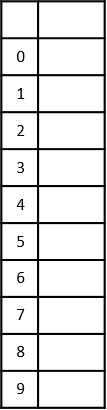
构建一个表格,根据索引存储值。由于给定的输入是十进制数,因此基于这些位的可能值(即 0-9)进行索引。
步骤 3
根据所有数字的最低有效位,将数字放置在其各自的索引位置。
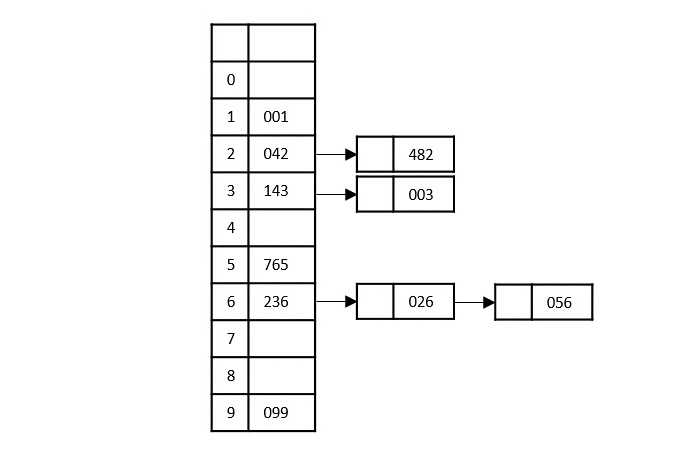
此步骤排序后的元素为 001, 042, 482, 143, 003, 765, 236, 026, 056, 099。
步骤 4
此步骤的输入顺序为上一步输出的顺序。现在,我们使用第二低有效位进行排序。
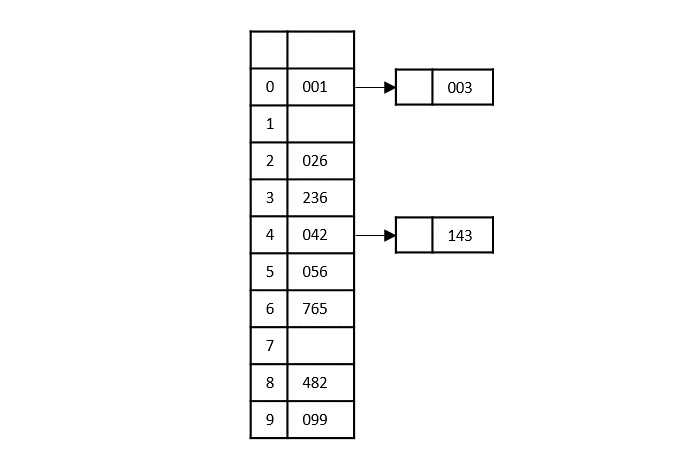
获得输出的顺序为 001, 003, 026, 236, 042, 143, 056, 765, 482, 099。
步骤 5
上一步后的输入列表重新排列为 −
001, 003, 026, 236, 042, 143, 056, 765, 482, 099
现在,我们需要对输入元素的最低有效位进行排序。
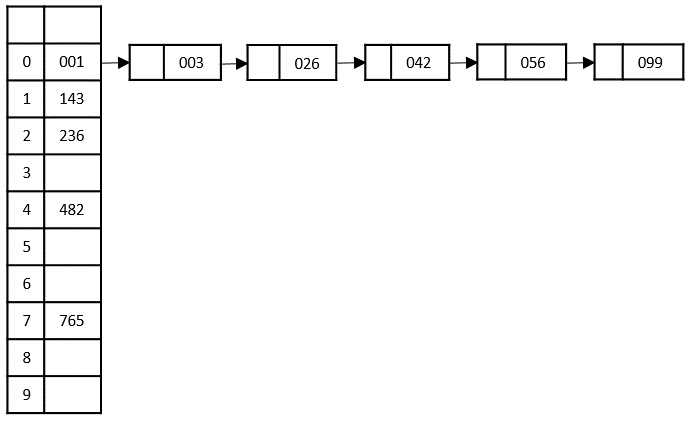
由于输入元素中没有更多位,此步骤获得的输出被视为最终输出。
最终排序输出为 −
1, 3, 26, 42, 56, 99, 143, 236, 482, 765
实现
计数排序算法辅助基数排序,对多个 d 位数字进行 d 次循环迭代排序。本教程中使用四种编程语言实现了基数排序:C、C++、Java、Python。
#include <stdio.h>
void countsort(int a[], int n, int pos){
   int output[n + 1];
   int max = (a[0] / pos) % 10;
   for (int i = 1; i < n; i++) {
      if (((a[i] / pos) % 10) > max)
         max = a[i];
   }
   int count[max + 1];
   for (int i = 0; i < max; ++i)
      count[i] = 0;
   for (int i = 0; i < n; i++)
      count[(a[i] / pos) % 10]++;
   for (int i = 1; i < 10; i++)
      count[i] += count[i - 1];
   for (int i = n - 1; i >= 0; i--) {
      output[count[(a[i] / pos) % 10] - 1] = a[i];
      count[(a[i] / pos) % 10]--;
   }
   for (int i = 0; i < n; i++)
      a[i] = output[i];
}
void radixsort(int a[], int n){
   int max = a[0];
   for (int i = 1; i < n; i++)
      if (a[i] > max)
         max = a[i];
   for (int pos = 1; max / pos > 0; pos *= 10)
      countsort(a, n, pos);
}
int main(){
   int a[] = {236, 15, 333, 27, 9, 108, 76, 498};
   int n = sizeof(a) / sizeof(a[0]);
   printf("Before sorting array elements are: ");
   for (int i = 0; i <n; ++i) {
      printf("%d ", a[i]);
   }
   radixsort(a, n);
   printf("\nAfter sorting array elements are: ");
   for (int i = 0; i < n; ++i) {
      printf("%d ", a[i]);
   }
   printf("\n");
}
输出
Before sorting array elements are: 236 15 333 27 9 108 76 498
After sorting array elements are: 9 15 27 76 108 236 333 498
#include <iostream>
using namespace std;
void countsort(int a[], int n, int pos){
   int output[n + 1];
   int max = (a[0] / pos) % 10;
   for (int i = 1; i < n; i++) {
      if (((a[i] / pos) % 10) > max)
         max = a[i];
   }
   int count[max + 1];
   for (int i = 0; i < max; ++i)
      count[i] = 0;
   for (int i = 0; i < n; i++)
      count[(a[i] / pos) % 10]++;
   for (int i = 1; i < 10; i++)
      count[i] += count[i - 1];
   for (int i = n - 1; i >= 0; i--) {
      output[count[(a[i] / pos) % 10] - 1] = a[i];
      count[(a[i] / pos) % 10]--;
   }
   for (int i = 0; i < n; i++)
      a[i] = output[i];
}
void radixsort(int a[], int n){
   int max = a[0];
   for (int i = 1; i < n; i++)
      if (a[i] > max)
         max = a[i];
   for (int pos = 1; max / pos > 0; pos *= 10)
      countsort(a, n, pos);
}
int main(){
   int a[] = {236, 15, 333, 27, 9, 108, 76, 498};
   int n = sizeof(a) / sizeof(a[0]);
   cout <<"Before sorting array elements are: ";
   for (int i = 0; i < n; ++i) {
      cout <<a[i] << " ";
   }
   radixsort(a, n);
   cout <<"\nAfter sorting array elements are: ";
   for (int i = 0; i < n; ++i) {
      cout << a[i] << " ";
   }
   cout << "\n";
}
输出
Before sorting array elements are: 236 15 333 27 9 108 76 498
After sorting array elements are: 9 15 27 76 108 236 333 498
import java.io.*;
public class Main {
   static void countsort(int a[], int n, int pos) {
      int output[] = new int[n + 1];
      int max = (a[0] / pos) % 10;
      for (int i = 1; i < n; i++) {
         if (((a[i] / pos) % 10) > max)
            max = a[i];
      }
      int count[] = new int[max + 1];
      for (int i = 0; i < max; ++i)
         count[i] = 0;
      for (int i = 0; i < n; i++)
         count[(a[i] / pos) % 10]++;
      for (int i = 1; i < 10; i++)
         count[i] += count[i - 1];
      for (int i = n - 1; i >= 0; i--) {
         output[count[(a[i] / pos) % 10] - 1] = a[i];
         count[(a[i] / pos) % 10]--;
      }
      for (int i = 0; i < n; i++)
         a[i] = output[i];
   }
   static void radixsort(int a[], int n) {
      int max = a[0];
      for (int i = 1; i < n; i++)
         if (a[i] > max)
            max = a[i];
      for (int pos = 1; max / pos > 0; pos *= 10)
         countsort(a, n, pos);
   }
   public static void main(String args[]) {
      int a[] = {236, 15, 333, 27, 9, 108, 76, 498};
      int n = a.length;
      System.out.println("Before sorting array elements are: ");
      for (int i = 0; i < n; ++i)
         System.out.print(a[i] + " ");
      radixsort(a, n);
      System.out.println("\nAfter sorting array elements are: ");
      for (int i = 0; i < n; ++i)
         System.out.print(a[i] + " ");
   }
}
输出
Before sorting array elements are:
236 15 333 27 9 108 76 498
After sorting array elements are:
9 15 27 76 108 236 333 498
def countsort(a, pos):
   n = len(a)
   output = [0] * n
   count = [0] * 10
   for i in range(0, n):
      idx = a[i] // pos
      count[idx % 10] += 1
   for i in range(1, 10):
      count[i] += count[i - 1]
   i = n - 1
   while i >= 0:
      idx = a[i] // pos
      output[count[idx % 10] - 1] = a[i]
      count[idx % 10] -= 1
      i -= 1
   for i in range(0, n):
      a[i] = output[i]

def radixsort(a):
   maximum = max(a)
   pos = 1
   while maximum // pos > 0:
      countsort(a, pos)
      pos *= 10

a = [236, 15, 333, 27, 9, 108, 76, 498]
print("Before sorting array elements are: ")
print (a)
radixsort(a)
print("After sorting array elements are: ")
print (a)
输出
Before sorting array elements are:
[236, 15, 333, 27, 9, 108, 76, 498]
After sorting array elements are:
[9, 15, 27, 76, 108, 236, 333, 498]